
What is it?
This surgery treats sinus problems that are still there, or came back, after an earlier surgery. Your anatomy has already changed once, so this surgery takes extra care and planning.
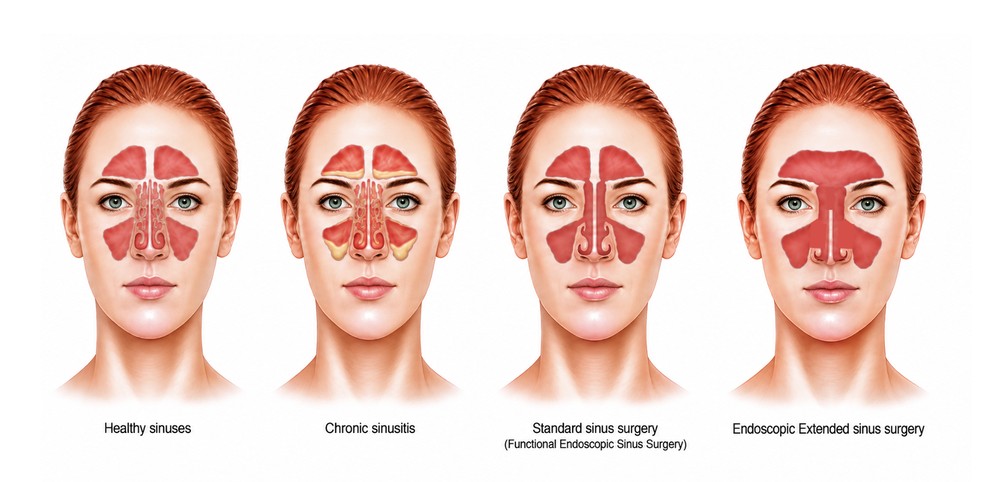
Original educational illustration created by the author; anatomy is simplified for clarity. Source: Samargandy S, 2026.
Who may benefit?
People whose symptoms haven't gone away after one or more sinus surgeries, especially when scar tissue is part of the problem.
What happens during treatment?
Revision sinus surgery is carefully planned because the anatomy may have changed after previous surgery. The goal is to address persistent blockage, scarring, inflammation, or underlying sinus disease, while also widening narrowed sinus openings, opening sinuses that were not previously opened, restoring natural mucus drainage pathways, and improving ventilation and aeration of the sinuses.
What is image-guided navigation?
We may use a computer-guided navigation system to help move safely through changed anatomy during revision surgery.
Image-guided navigation works a little like a GPS system for sinus surgery. Your preoperative CT scan is linked to specialized surgical instruments, allowing the surgeon to see the instrument's location in relation to your individual sinus anatomy during the operation.
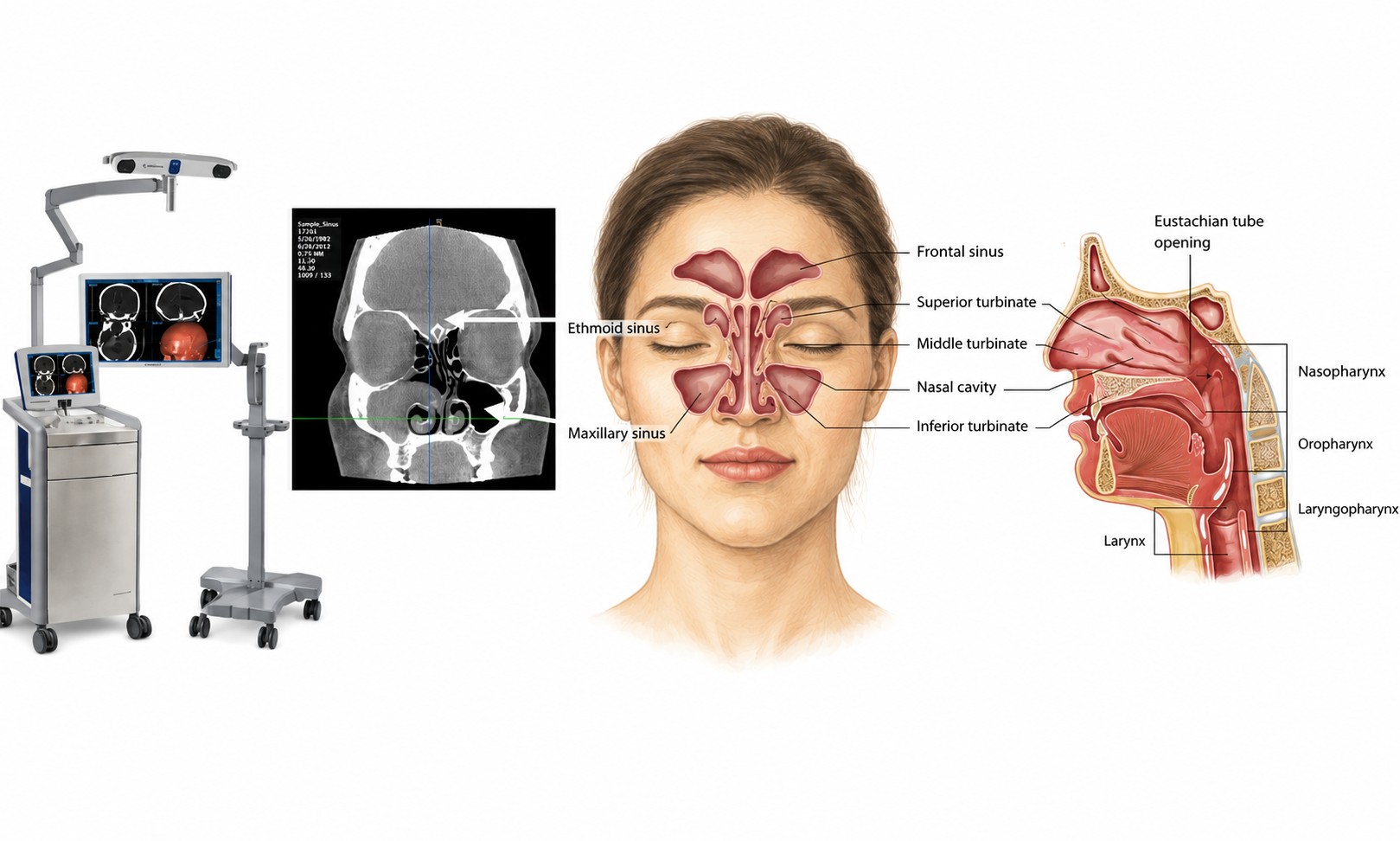
This can be especially helpful in revision surgery, where normal anatomical landmarks may have changed after previous surgery.
Navigation may help the surgeon:
- Identify important structures more precisely.
- Navigate scarred or altered anatomy.
- Work safely near the eyes, skull base, and other critical structures.
- Perform a more targeted and thorough procedure.
Image-guided navigation is an additional surgical guidance tool and is used alongside direct endoscopic visualization and the surgeon's knowledge of anatomy.
Recovery
Recovery is similar to a first sinus surgery. Close follow-up matters more here, to stop new scar tissue from forming.