
What causes nosebleeds?
Dryness is the most common cause of nosebleeds. When the lining of the nose becomes dry, it can crack and bleed easily. Other contributing factors include nose picking, forceful nose blowing, incorrect technique when using nasal sprays, trauma, and blood-thinning medications. In some cases, recurrent or heavier bleeding may come from a blood vessel deeper inside the nose and may require further evaluation.
Common symptoms
- Bleeding from one or both sides of the nose.
- Bleeding that starts suddenly, often without an obvious cause.
- Nosebleeds that keep happening over weeks or months.
- Occasionally, blood draining down the back of the throat instead of out the front of the nose.
How is it diagnosed?
We ask about how often the nosebleeds happen, how severe they are, and any medications or habits that might contribute. We look inside your nose with a thin camera to check for a specific bleeding site or blood vessel. Further testing is sometimes needed if bleeding is frequent, heavy, or doesn't have a clear cause.
Office-Based Treatment
- Chemical cautery with silver nitrate — a medication is applied directly to the bleeding point to seal it.
- Bipolar cautery — controlled energy is used to seal the bleeding blood vessel.
- Nasal packing when needed.
What to Do During a Nosebleed
- Sit upright and lean slightly forward.
- Pinch the soft part of the nose continuously for about 10 to 15 minutes without letting go to check.
- Do not tilt your head back. This can cause blood to run down the throat, which may lead to coughing, choking, or swallowing blood.
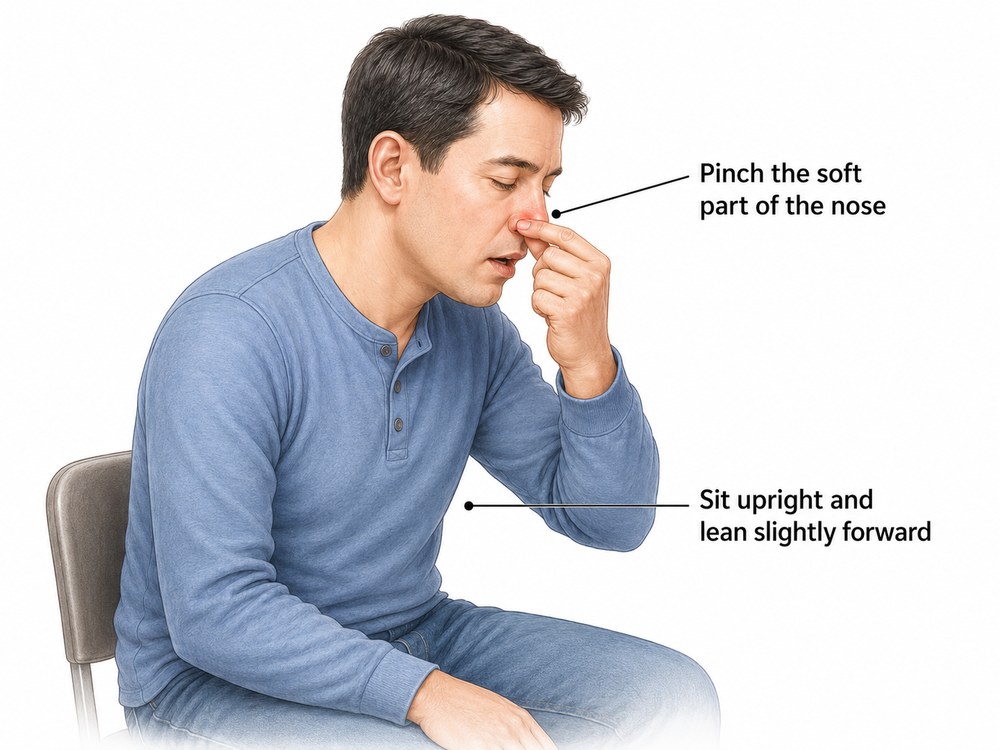
Original educational illustration created by the author; anatomy is simplified for clarity. Source: Samargandy S, 2026.
How to Prevent Nosebleeds
The main goal is to keep the inside of the nose well moisturized, especially in dry weather or air-conditioned environments.
- Use a nasal moisturizing gel or ointment regularly.
- Consider using a room humidifier, especially in the bedroom, if the air is very dry.
- Avoid nose picking and forceful nose blowing.
- Use the correct technique with nasal sprays so they are directed away from the nasal septum.
- After a nosebleed, saline spray can help loosen crusts and dried blood so they do not need to be picked. It should not be relied on as the main moisturizer, as frequent saline use may sometimes worsen dryness.