
Septoplasty and turbinoplasty are two different procedures that are often performed together during the same operation, since a deviated septum and enlarged turbinates commonly contribute to nasal blockage at the same time.
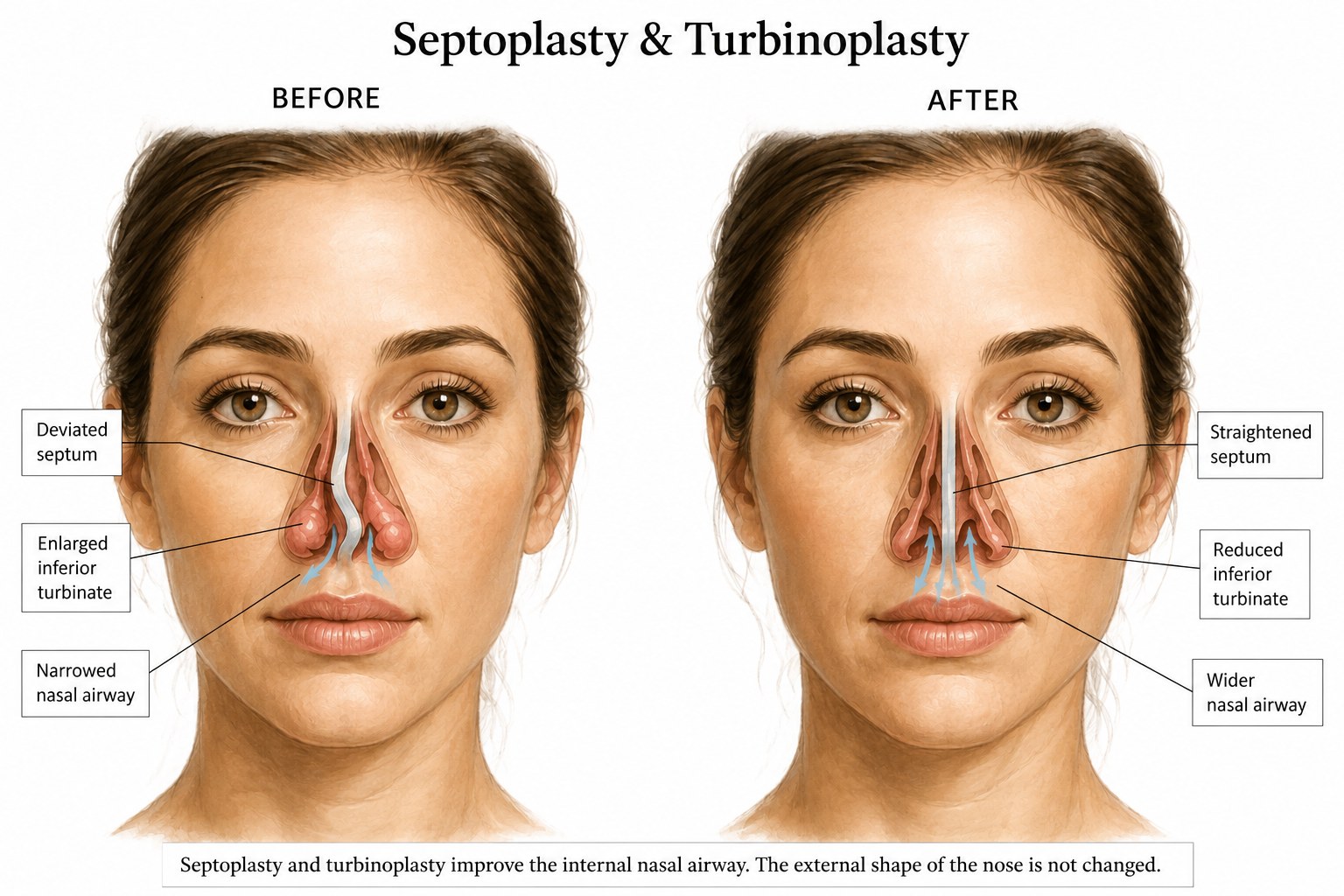
Original educational illustration created by the author; anatomy is simplified for clarity. Source: Samargandy S, 2026.
Septoplasty
What is it?
This surgery straightens the wall inside your nose. It's all done inside the nose — no cuts you can see on the outside.
Who may benefit?
People whose blocked nose is mainly caused by a crooked septum, and who haven't found relief through medicine alone.
What happens during treatment?
The surgeon works through your nostrils to reshape the crooked part. This straightens your airway while keeping the nose's normal support in place.
Recovery
Most people go home the same day. Some swelling in the first week is normal. Most people are back to work within about a week.
Turbinoplasty
What is it?
Turbinates are small structures inside your nose that warm and moisten the air you breathe. When they swell too much, they can block your airway. Turbinoplasty surgically reduces their size. For milder cases, an in-office alternative called coblation may be appropriate instead — see the link below.
Who may benefit?
People whose blocked nose is caused by swollen turbinates that haven't improved with sprays or allergy treatment. It's often done alongside septoplasty.
What happens during treatment?
We carefully reduce the size of the turbinate tissue. The goal is a clearer airway, while keeping the turbinates able to do their normal job.
Recovery
Recovery is usually quick. Most people notice easier breathing within a few weeks, as the swelling goes down. When both procedures are done together, overall recovery is similar to septoplasty alone.