
Nasal sprays are used for several different reasons, including allergies, congestion, inflammation and a runny nose. The type of spray matters, and so does the way you use it.
Common types of nasal sprays
Saline sprays
Saline contains salt water and helps moisturize the nose, loosen mucus and reduce dryness or crusting. It can usually be used as often as needed.
Steroid nasal sprays
Steroid sprays reduce inflammation inside the nose. They are commonly used for:
- Allergic rhinitis.
- Nasal polyps.
- Chronic sinus inflammation.
- Nasal congestion related to inflammation.
They work best when used regularly, rather than only when symptoms are severe. The benefit may build gradually over several days or weeks.
Antihistamine nasal sprays
These help control allergy symptoms such as:
- Sneezing.
- Itching.
- Runny nose.
- Nasal congestion.
Some sprays combine an antihistamine with a steroid.
Decongestant sprays
Decongestant sprays can quickly open a blocked nose, but they should generally be used only for a short period of time. Using them repeatedly for too long can cause rebound congestion, where the nose becomes more blocked when the spray wears off.
Sprays for a watery runny nose
Some nasal sprays are designed specifically to reduce excessive watery drainage rather than congestion or inflammation.
How to use a nasal spray correctly
Technique makes a difference.
- Gently blow your nose first if needed.
- Keep your head upright or slightly tilted forward.
- Place the nozzle just inside the nostril.
- Aim the spray slightly outward, toward the ear on the same side, rather than toward the middle wall of the nose.
- Spray while taking a gentle breath in through the nose.
- Avoid sniffing strongly — this can pull the medication into the throat instead of keeping it in the nose.
- Repeat on the other side if instructed.
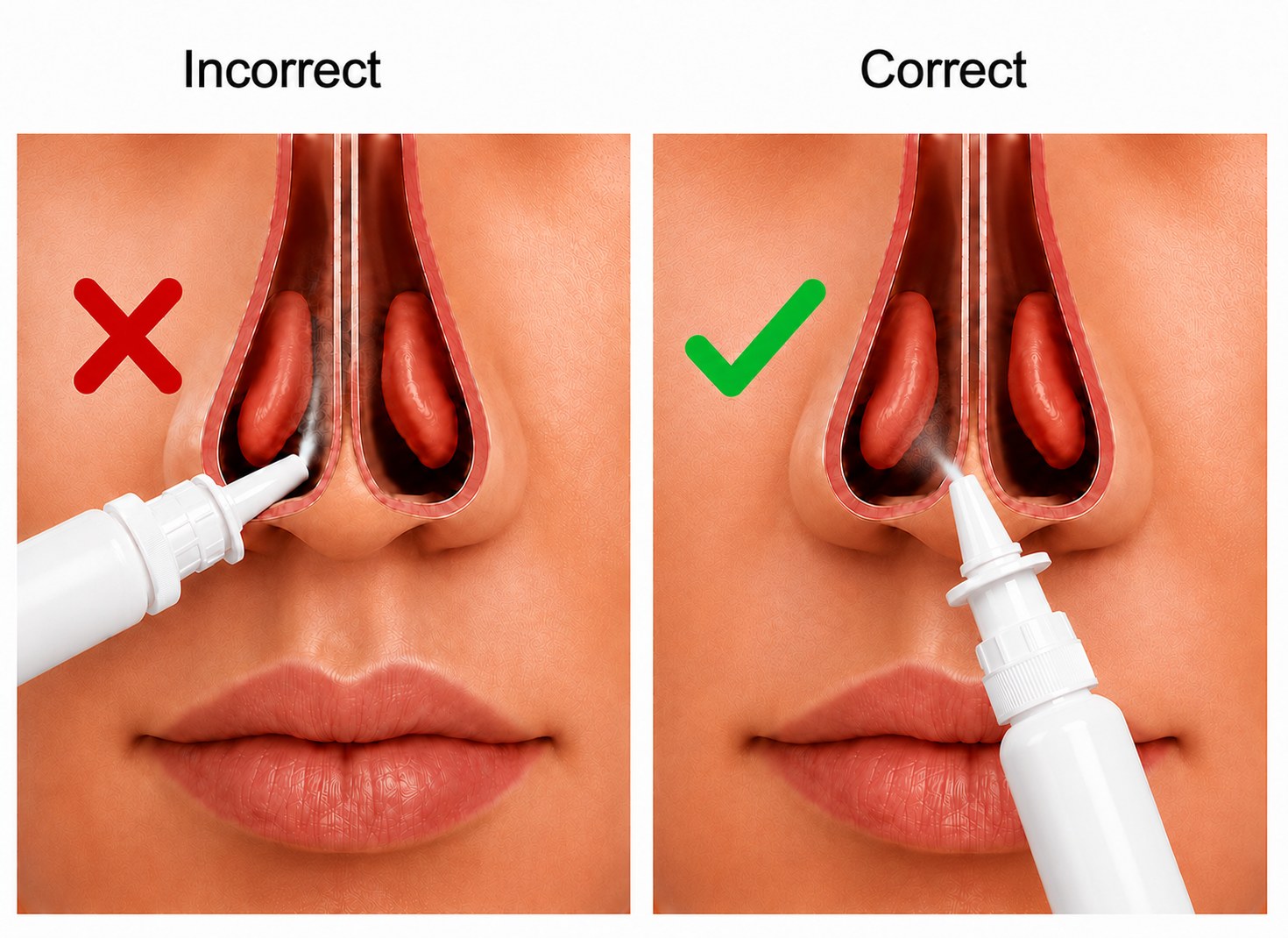
Original educational illustration created by the author; anatomy is simplified for clarity. Source: Samargandy S, 2026.
Aim away from the middle of the nose. This also helps reduce irritation and nosebleeds from spraying directly onto the nasal septum (the wall inside the nose that separates the two sides).
Common mistakes
- Pointing the spray toward the nasal septum.
- Sniffing too hard.
- Stopping a steroid spray after only a few days because it has not worked yet.
- Using decongestant sprays for prolonged periods.
- Using someone else's nasal spray.
If your spray causes nosebleeds
If you develop repeated nosebleeds, irritation or significant dryness, check your spray technique and make sure you are aiming away from the nasal septum. If bleeding continues, stop and ask your doctor whether the medication or technique needs to be changed.
Your prescribed spray may be different
Not every nasal spray is appropriate for every condition. Your treatment may also change after sinus surgery or depending on what is found during nasal endoscopy. Follow the instructions given for your specific medication.