
What are they?
Nasal polyps are soft, non-cancerous (benign) inflammatory growths that develop from the lining of the nose and sinuses. They occur with chronic rhinosinusitis and may affect nasal breathing, sinus drainage, and the sense of smell.
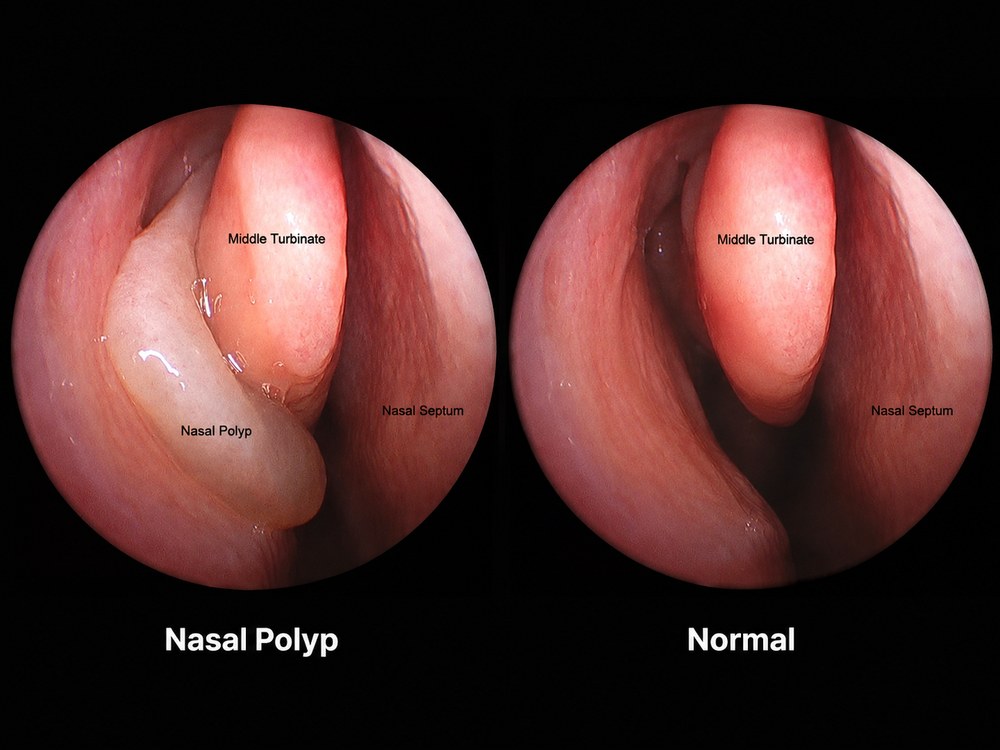
Common symptoms
- A blocked nose that gets worse over time.
- A weaker or lost sense of smell.
- A runny nose, or mucus dripping down your throat.
- A feeling of pressure in your face.
Why does it happen?
Polyps come from swelling inside the nose that doesn't go away. In some people, this is linked to asthma and a sensitivity to aspirin. In others, allergies play a role. Sometimes there's no clear reason.
How is it diagnosed?
- We look at the polyps directly with a thin camera (nasal endoscopy).
- A CT scan shows how far the polyps have spread.
- We may test your sense of smell.
Treatment
Steroid nasal sprays are usually the first treatment. Sometimes we add a short course of steroid pills. If polyps keep coming back despite this, biologic therapy (given by injection) or surgery to remove the polyps and open the sinuses may be considered.
Why do polyps come back? The swelling that causes polyps is an ongoing condition. Polyps can return even after treatment works well. This is why staying on medicine long-term matters.
Frequently asked questions
Are nasal polyps cancer?
No, they are not cancer. But any unusual growth, especially on one side, should still be checked to be safe.
Can medicine shrink polyps without surgery?
Often, yes. Many people respond well to nasal sprays or biologic medicine without needing surgery.
What about biologic therapy?
Biologic medications target specific inflammatory pathways involved in nasal polyps. They may be considered in selected patients with severe or recurrent disease, particularly when symptoms remain poorly controlled despite appropriate medical treatment and after complete sinus surgery that has adequately opened the affected sinuses.
Can nasal polyps come back after surgery?
Nasal polyps are part of a chronic inflammatory condition and can recur after surgery in some cases. Long-term topical treatment and follow-up may reduce the risk and help control recurrent disease.