
What is it?
This surgery is done through your nostrils. There are no cuts on your face. The surgeon uses a thin camera and small tools to open blocked sinuses and clear away polyps.
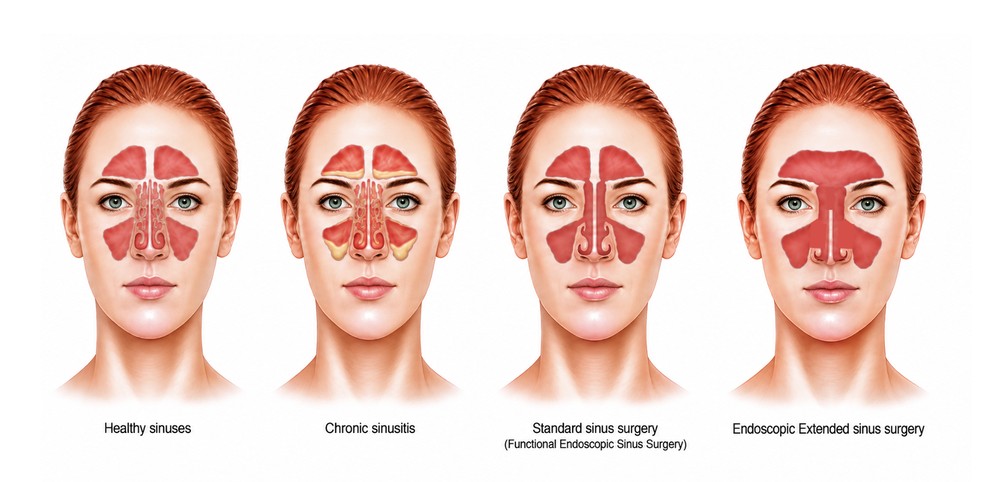
Original educational illustration created by the author; anatomy is simplified for clarity. Source: Samargandy S, 2026.
Who may benefit?
People with sinus problems that haven't gotten better with a full course of medicine.
Alternatives
Appropriate medical therapy is considered first, which can include biologic medicine for polyps when relevant. Surgery is discussed when this hasn't given adequate relief.
What happens during treatment?
You're asleep under general anesthesia. The surgeon widens the natural openings of your sinuses. Blocked tissue is cleared away, so your sinuses can drain normally again.
Recovery
Most people go home the same day. Nose rinses usually start within a day or two. You'll come in for gentle cleaning a few times over the first weeks. Most people return to normal activity in one to two weeks.
Risks
As with any surgery, there's a small risk of bleeding or infection. Rarely, nearby structures can be injured. We'll go over all of this with you before surgery.
Follow-up
Staying on your medicine after surgery matters, especially if you have polyps. It lowers the chance of your symptoms coming back.