
What is it?
Chronic rhinosinusitis (CRS) means the lining of your nose and sinuses stays inflamed for a long time. Doctors diagnose it when symptoms last 12 weeks or more and there's visible evidence of inflammation — seen either during an in-office nasal endoscopy or on a CT scan. Some people also have nasal polyps — noncancerous growths caused by that same inflammation. CRS can be mild or severe.
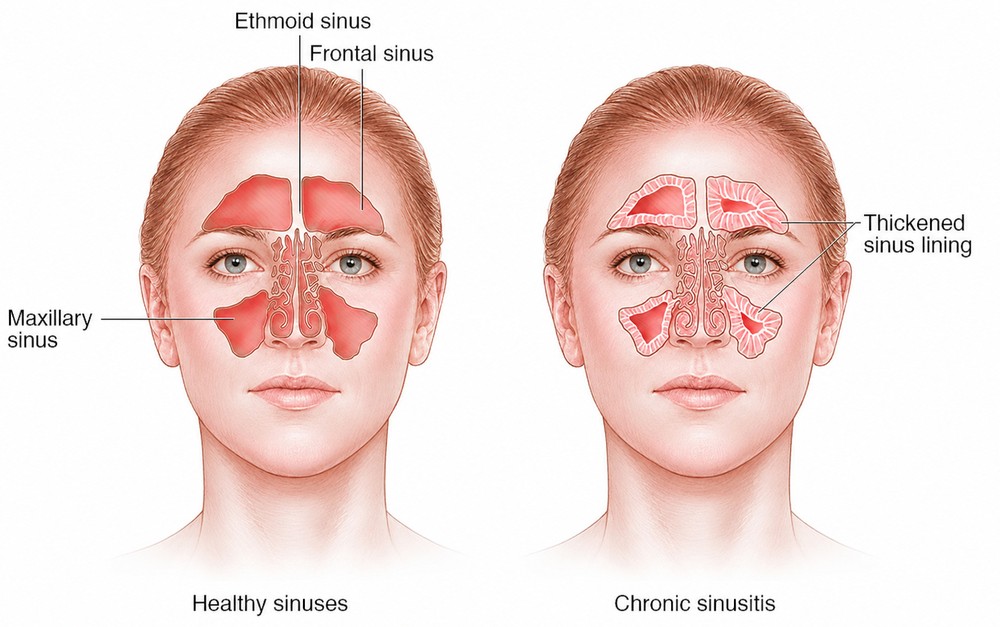
Original educational illustration created by the author; anatomy is simplified for clarity. Source: Samargandy S, 2026.
Common symptoms
- A stuffy nose that won't clear up.
- Thick mucus, or mucus dripping down your throat.
- Pressure or pain in your face.
- A weaker sense of smell.
Why does it happen?
CRS is a chronic inflammatory disease, not the result of one infection. In some patients, asthma, allergy, nasal polyps, aspirin sensitivity, or other immune factors contribute to that inflammation. The shape of your nose — like a deviated septum — doesn't usually cause CRS on its own, but it can affect how well your sinuses drain, which may make symptoms worse. In a smaller number of patients, CRS is linked to an underlying condition such as cystic fibrosis or primary ciliary dyskinesia, which affect how the sinuses clear mucus. These cases are usually more complex (see Complex Chronic Rhinosinusitis) and are best managed together with the relevant specialist team.
How is it diagnosed?
- We talk through your symptoms and health history.
- We look inside your nose with a thin, lighted camera called an endoscope.
- We may order a CT scan of your sinuses.
- Additional testing, such as allergy testing, when clinically appropriate.
Treatment
Treatment is individualized according to the type and severity of disease, your symptoms, previous treatment, and other health conditions. Options may include topical nasal therapies such as sprays and saline irrigation, as well as oral medications when indicated. Surgery may be considered when symptoms or inflammation persist despite appropriate medical therapy. For selected patients with chronic rhinosinusitis with nasal polyps, biologic therapy may also be an option.
When is surgery considered? Surgery may be considered when appropriate medical treatment hasn't provided adequate control, or when specific disease findings make it the right option. Not everyone with CRS needs surgery.
What happens if I need surgery?
Sinus surgery is done through your nostrils, with no cuts on your face. It widens the natural drainage pathways of your sinuses and removes inflamed tissue where needed — allowing your sinuses to ventilate properly and letting topical treatments like rinses and sprays reach them more effectively afterward.
Learn about Endoscopic Sinus Surgery →Frequently asked questions
Is chronic rhinosinusitis the same as acute sinusitis?
No. Acute sinusitis is a short-term infection that usually clears in a week or two. Chronic rhinosinusitis is an ongoing inflammatory condition lasting 12 weeks or more, which can persist or keep returning even without an active infection.
Will I definitely need surgery?
Treatment usually begins with appropriate medical therapy. Surgery may be recommended when symptoms remain significant despite treatment, or when specific findings make surgery the more appropriate option.
Can it come back after surgery?
It depends. Chronic rhinosinusitis is a chronic inflammatory condition and can recur, particularly in patients with nasal polyps. Long-term medical treatment and follow-up may still be important after surgery.