
What is it?
Odontogenic sinusitis is a sinus infection caused by a problem with an upper molar (back tooth). It is not a typical nose or allergy problem. The roots of the upper molars sit very close to the sinus above them, so a tooth infection, abscess, or a complication from dental work can spread into the sinus.
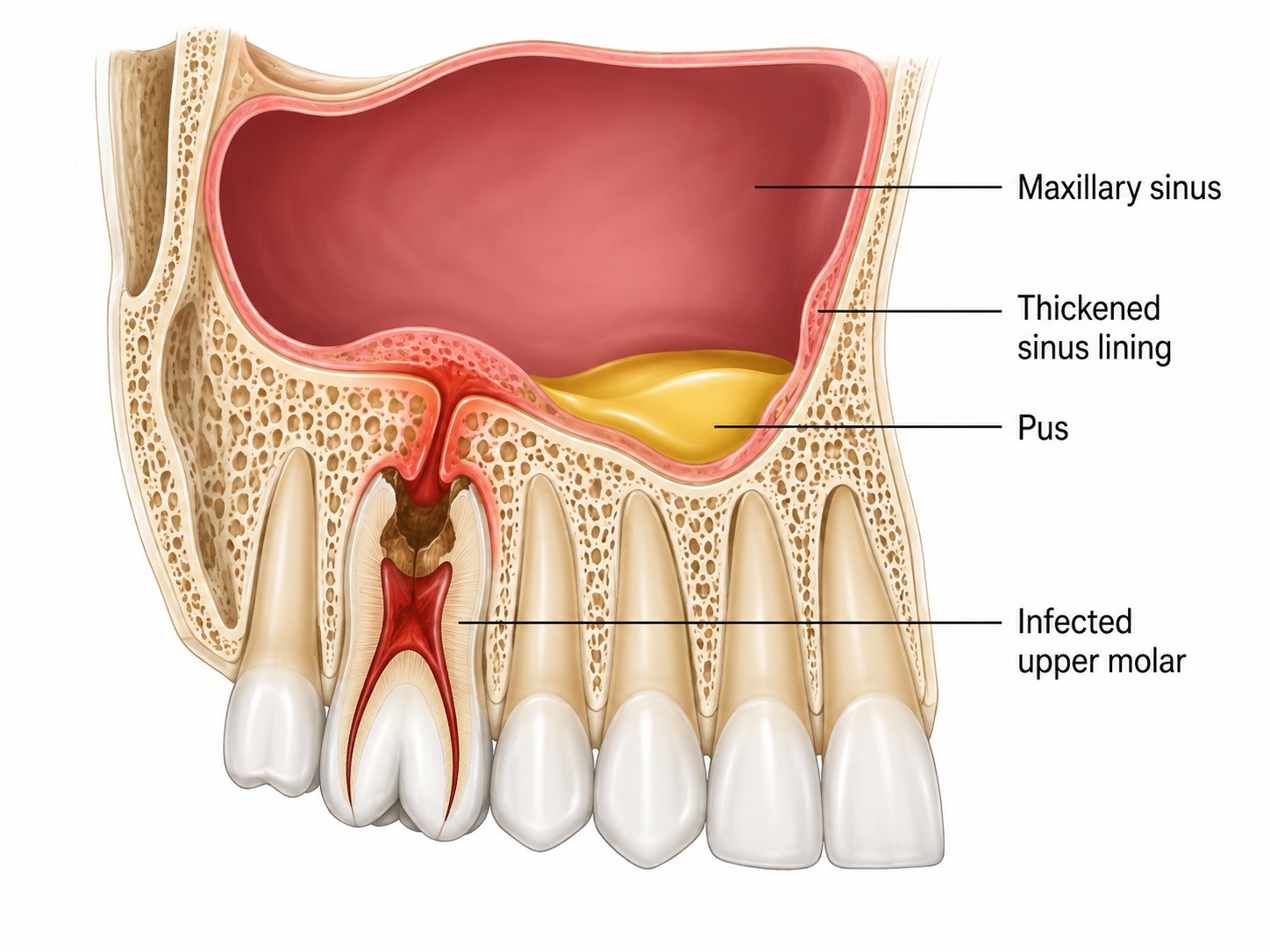
Original educational illustration created by the author; anatomy is simplified for clarity. Source: Samargandy S, 2026.
Common symptoms
- Pressure or pain in one cheek, often on just one side.
- A bad smell or taste, sometimes worse than with typical sinusitis.
- Thick or unpleasant postnasal drip, sometimes with a bad taste or smell.
- Tooth pain or tenderness — though not always. Some people have no dental symptoms at all.
- Symptoms that keep coming back despite usual sinus treatment.
How is it diagnosed?
A CT scan often shows sinus inflammation involving one or both sides, commonly centered in the maxillary sinus, which sits above the upper teeth. The scan may also show a dental source, such as an infected tooth, a previous root canal, or dental material extending into the sinus.
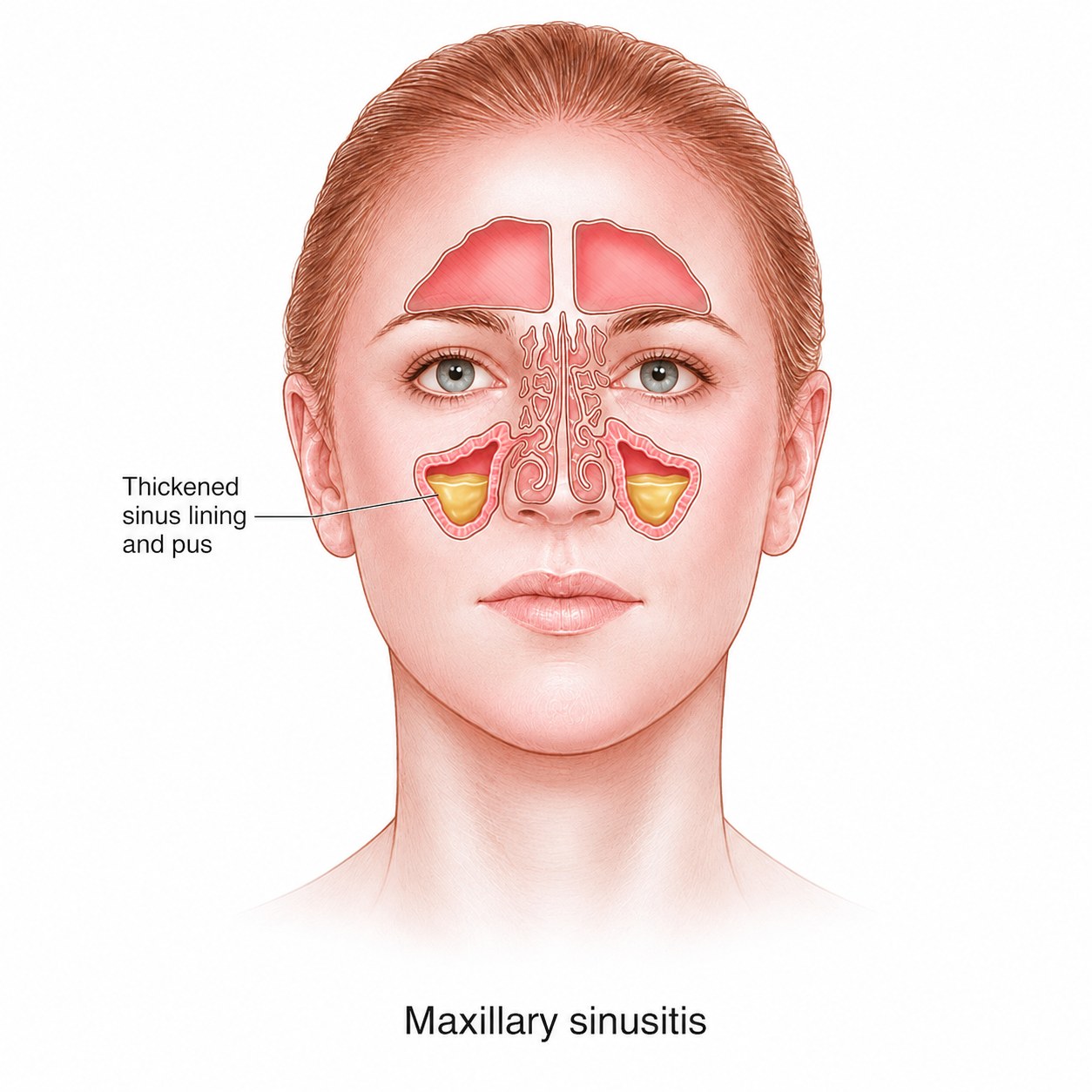
Original educational illustration created by the author; anatomy is simplified for clarity. Source: Samargandy S, 2026.
A dental examination, sometimes with dental X-rays or other dental imaging, can help confirm the cause.
Treatment
Treating the dental source of the infection is essential. This may involve a root canal, tooth extraction, or another dental procedure performed by a dentist or oral surgeon.
Some patients also need endoscopic sinus surgery to clear the infection and restore drainage from the sinus. Depending on the situation, sinus surgery may be performed before, after, or around the same time as the dental treatment.
Why treatment matters
If the dental source is not treated, the maxillary sinus (cheek sinus) can remain chronically inflamed or infected.
In some cases, removing an upper molar (back tooth) can create an opening between the mouth and the sinus. This is called an oroantral communication. If the opening does not heal on its own, it can persist and form an oroantral fistula.
Dental and sinus treatment often need to be coordinated.